
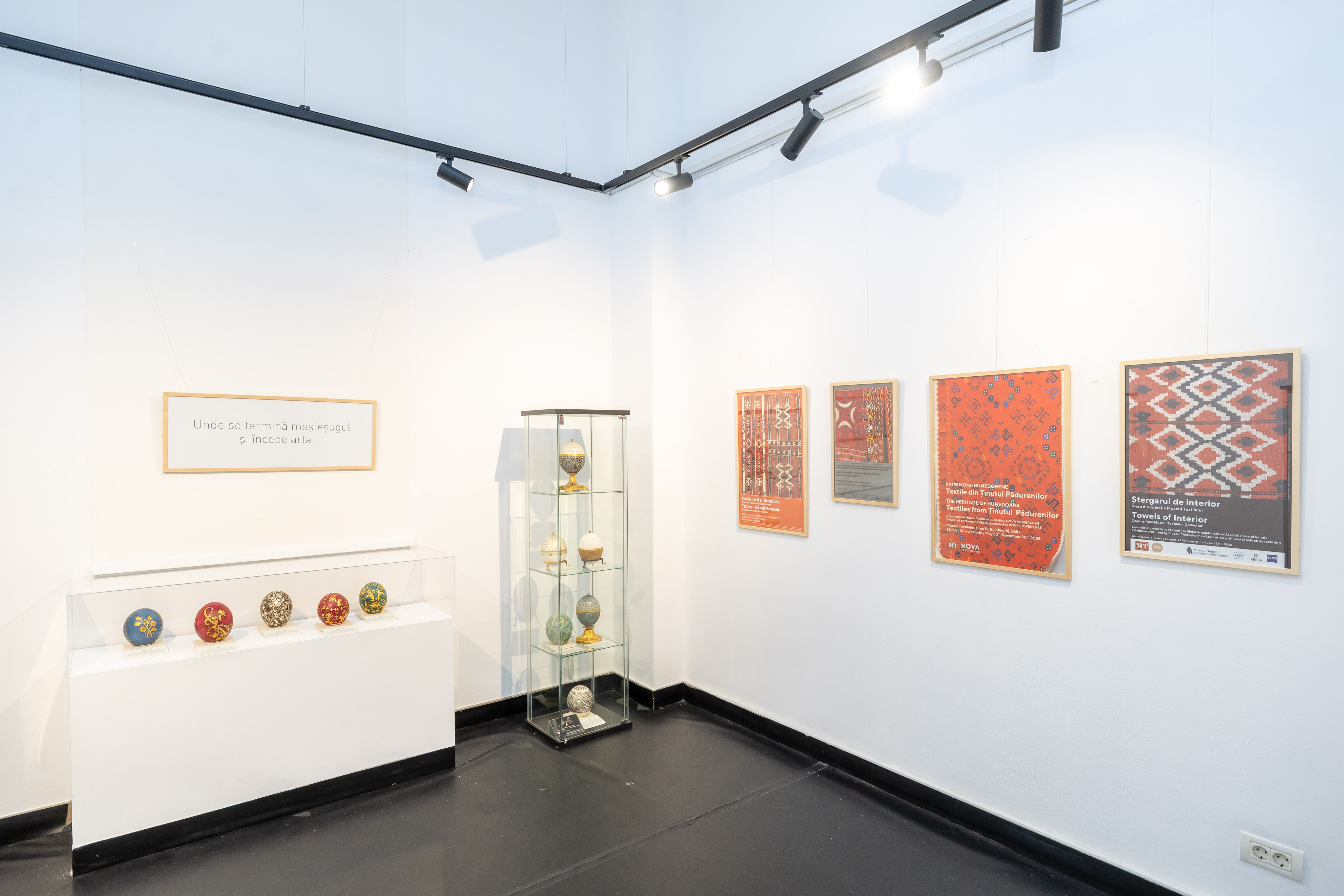
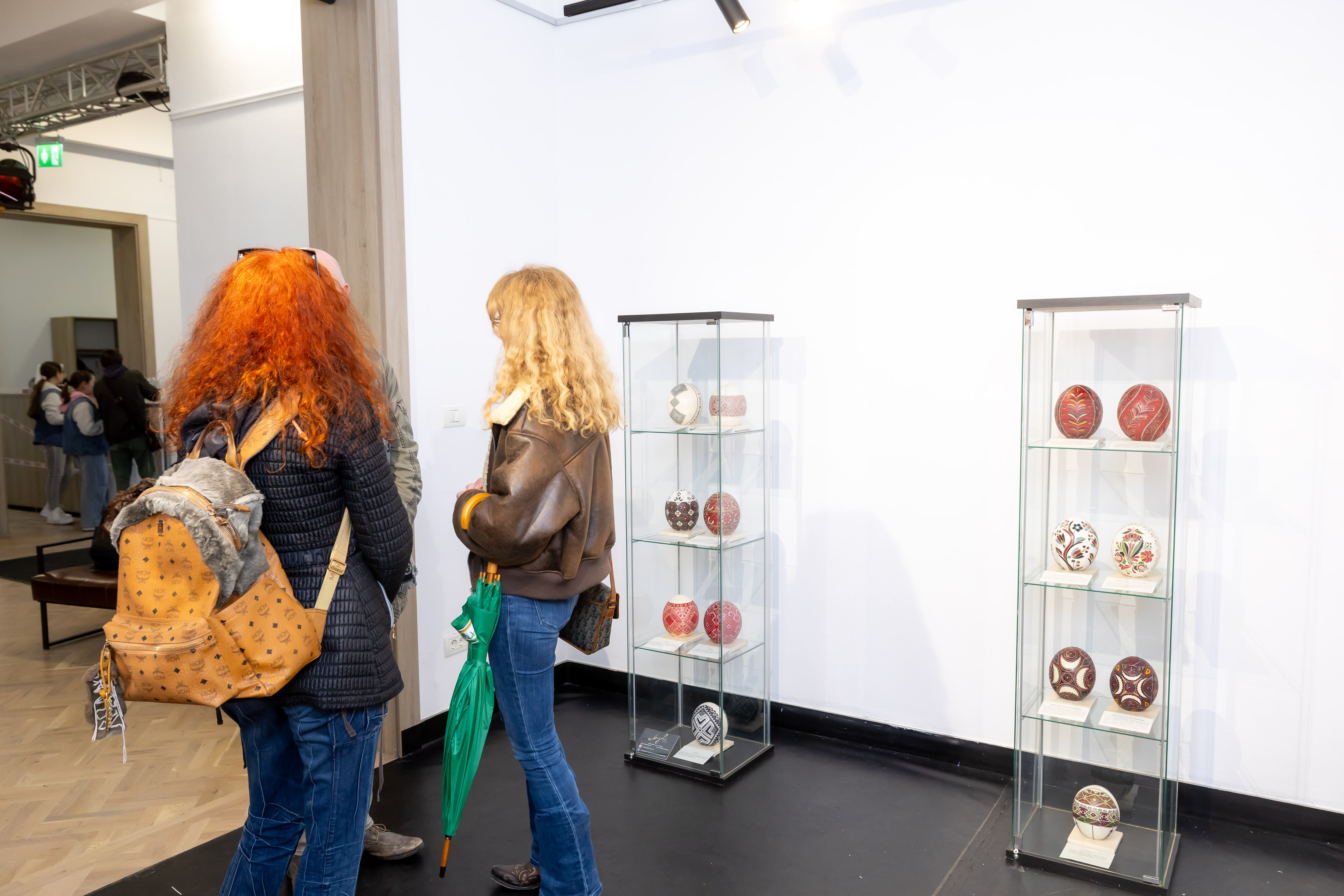
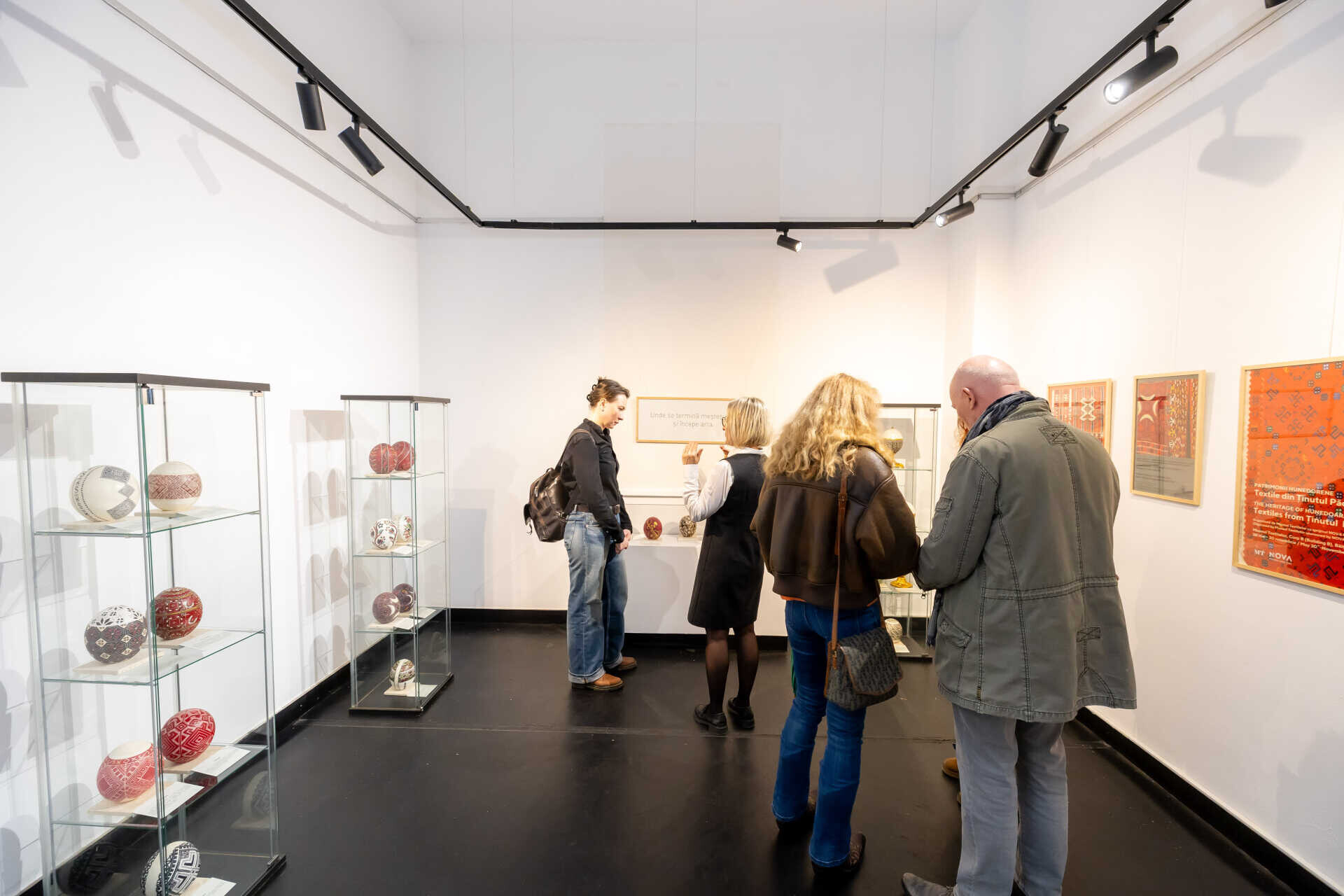
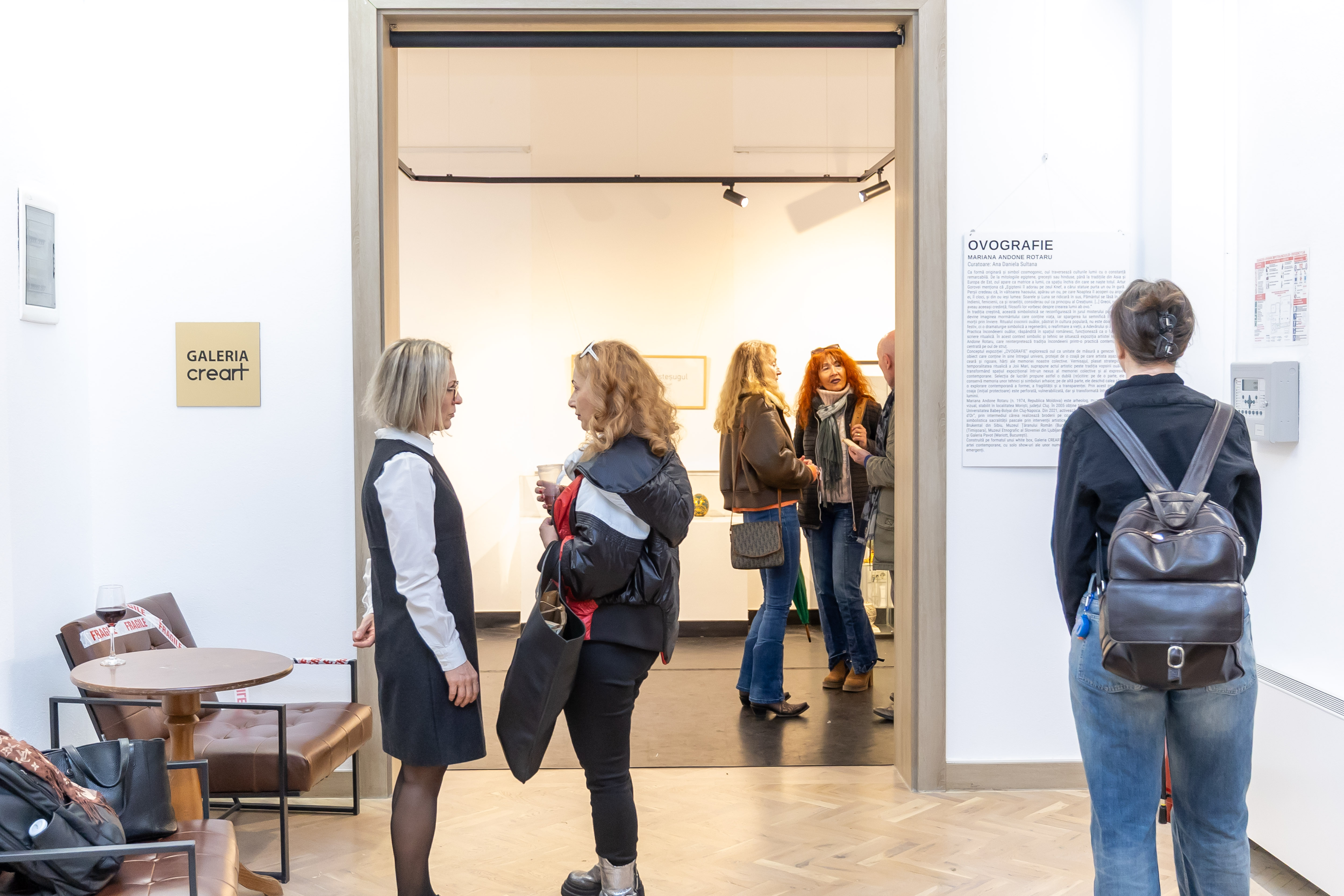
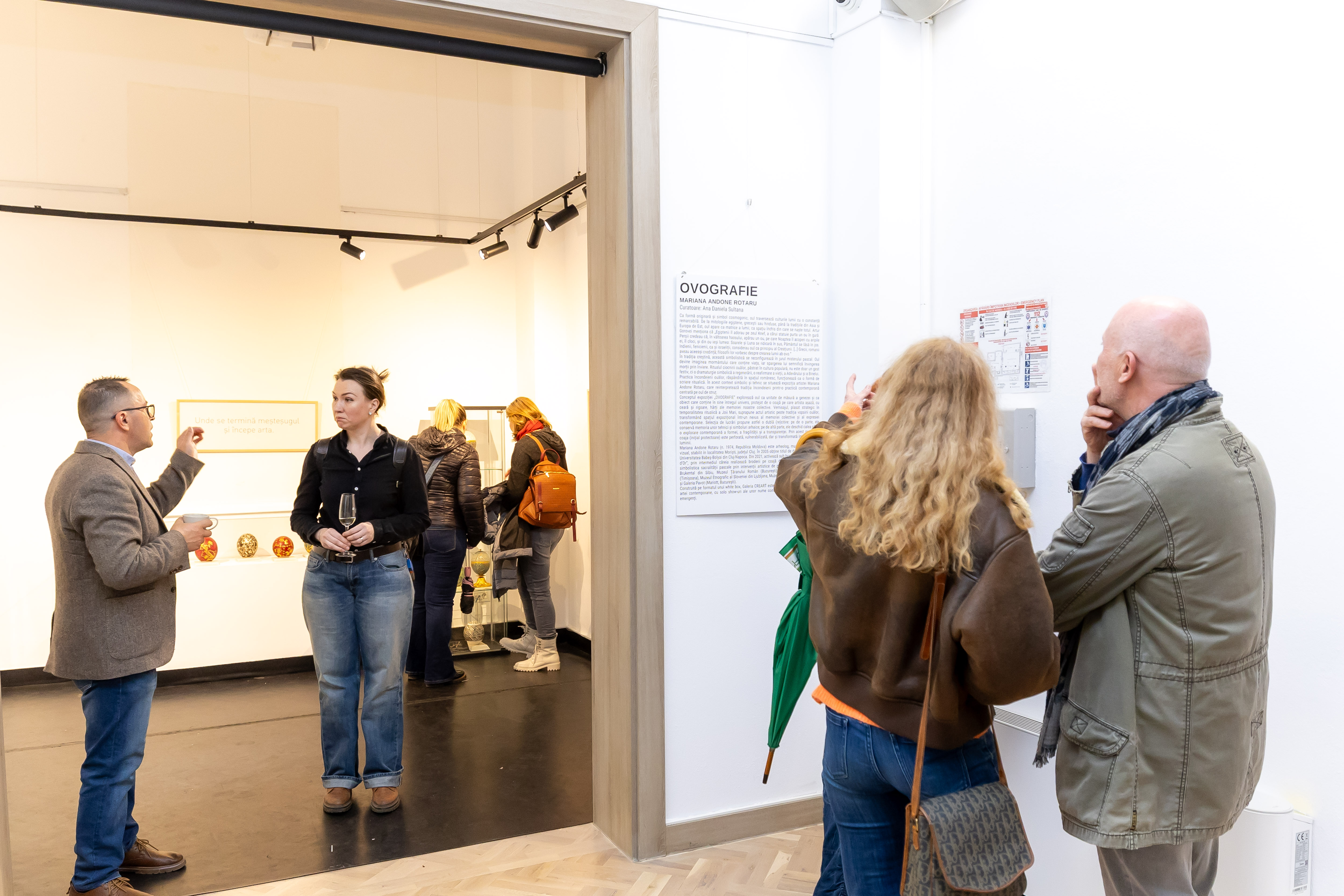
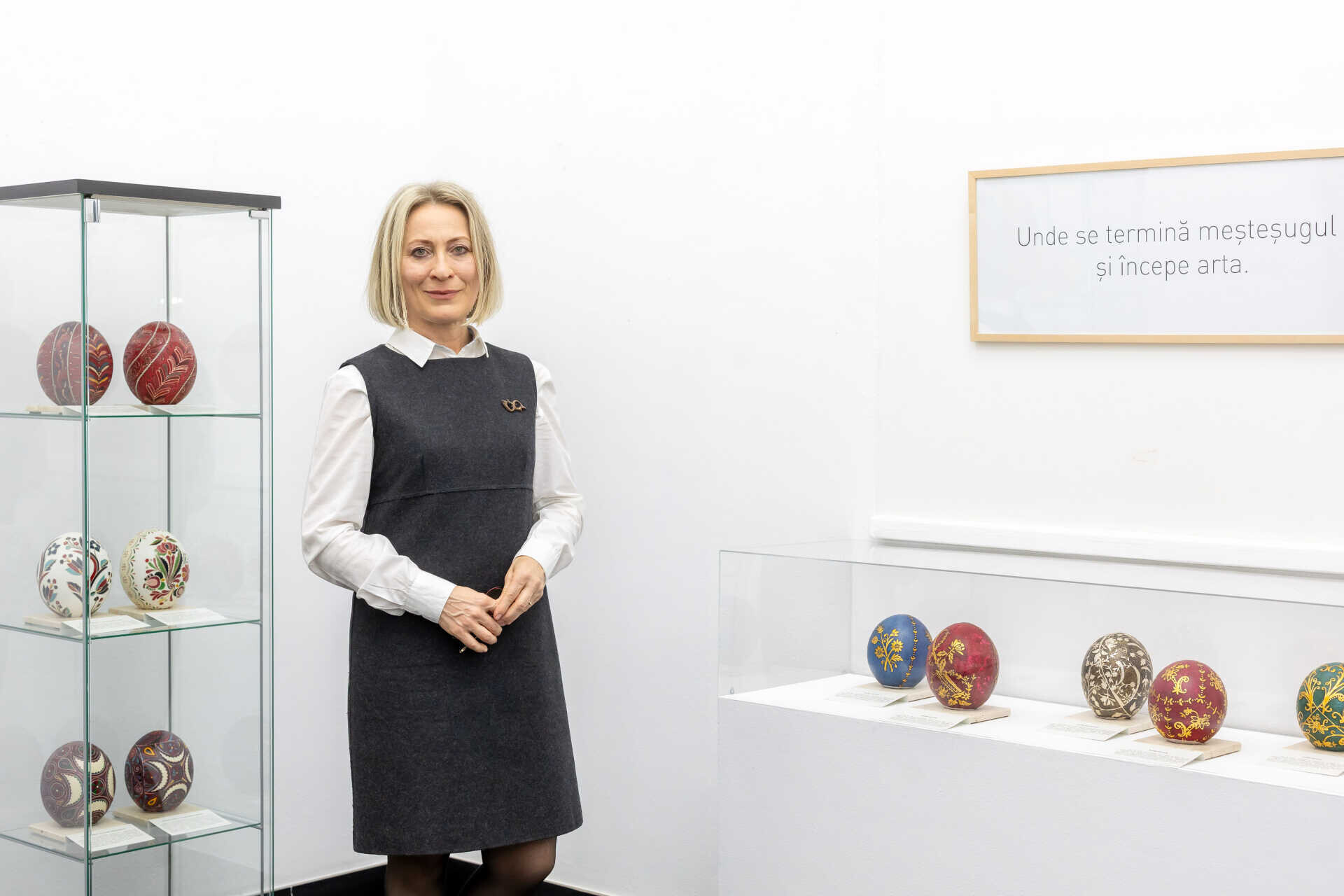
Organized by CREART—the Bucharest Center for Creation, Art, and Tradition—the exhibition is part of a defining direction within CREART Gallery’s curatorial program, which brings together, around Easter time, contemporary art projects inspired by the holiday. In previous years, this initiative included the Grivița 53 project “Egg by Egg and Brick by Brick” (2023), “Resurrection” solo exhibition by Eugen Raportoru (2024), and “CTRL + S(oul)” solo exhibition by Sabina Legănaru (2025). This year, during the Holy Week, CREART Gallery presents “OVOGRAFIE”, a solo by visual artist Mariana Andone Rotaru.
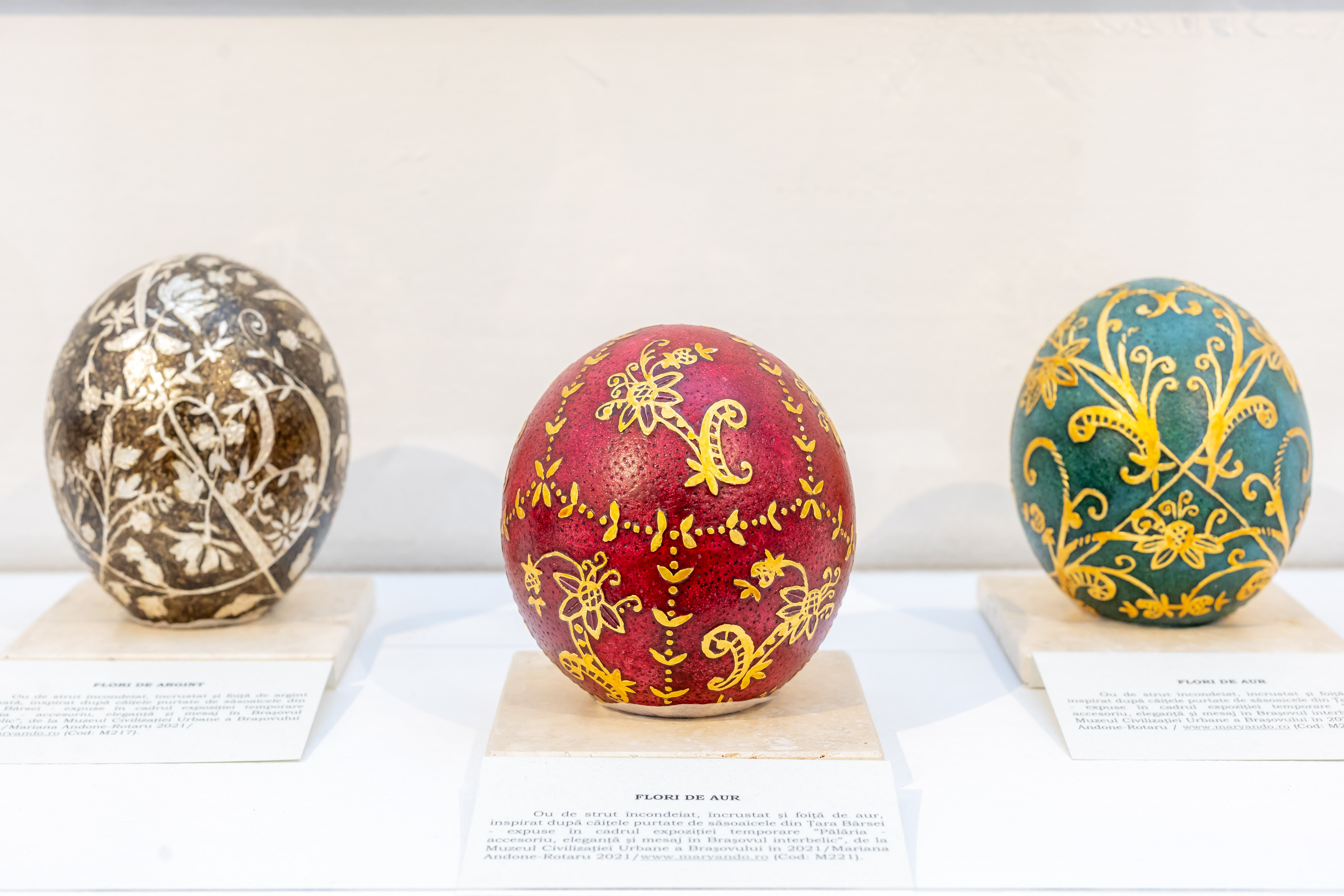
Specializing in the detail-oriented art of egg painting, the artist presents a reinterpretation of traditional motifs on an unconventional medium: the ostrich egg. By supporting such artists, CREART fulfills its mission to promote folk creativity and intangible cultural heritage by providing a platform for artistic crafts that, through innovation and excellence, become landmarks of the urban cultural landscape.
As a primordial form and cosmogonic symbol, the egg appears across the world’s cultures with remarkable consistency. From Egyptian, Greek, and Hindu mythologies to traditions in Asia and Eastern Europe, the egg appears as the matrix of the world, as a closed space from which everything is born. Artur Gorovei noted that “the Egyptians worshipped the god Knef, whose statue held an egg in its mouth. The Persians believed that, in the whirlwind of chaos, an egg appeared, which Night covered with her wings, incubated, and from that egg the world emerged: the Sun and the Moon rose upward, the Earth sank downward. The Indians, the Phoenicians, as well as the Israelites, regarded the egg as the principle of Creation. [...] The Greeks and Romans held the same belief; their philosophers speak of the creation of the world ab ovo.”
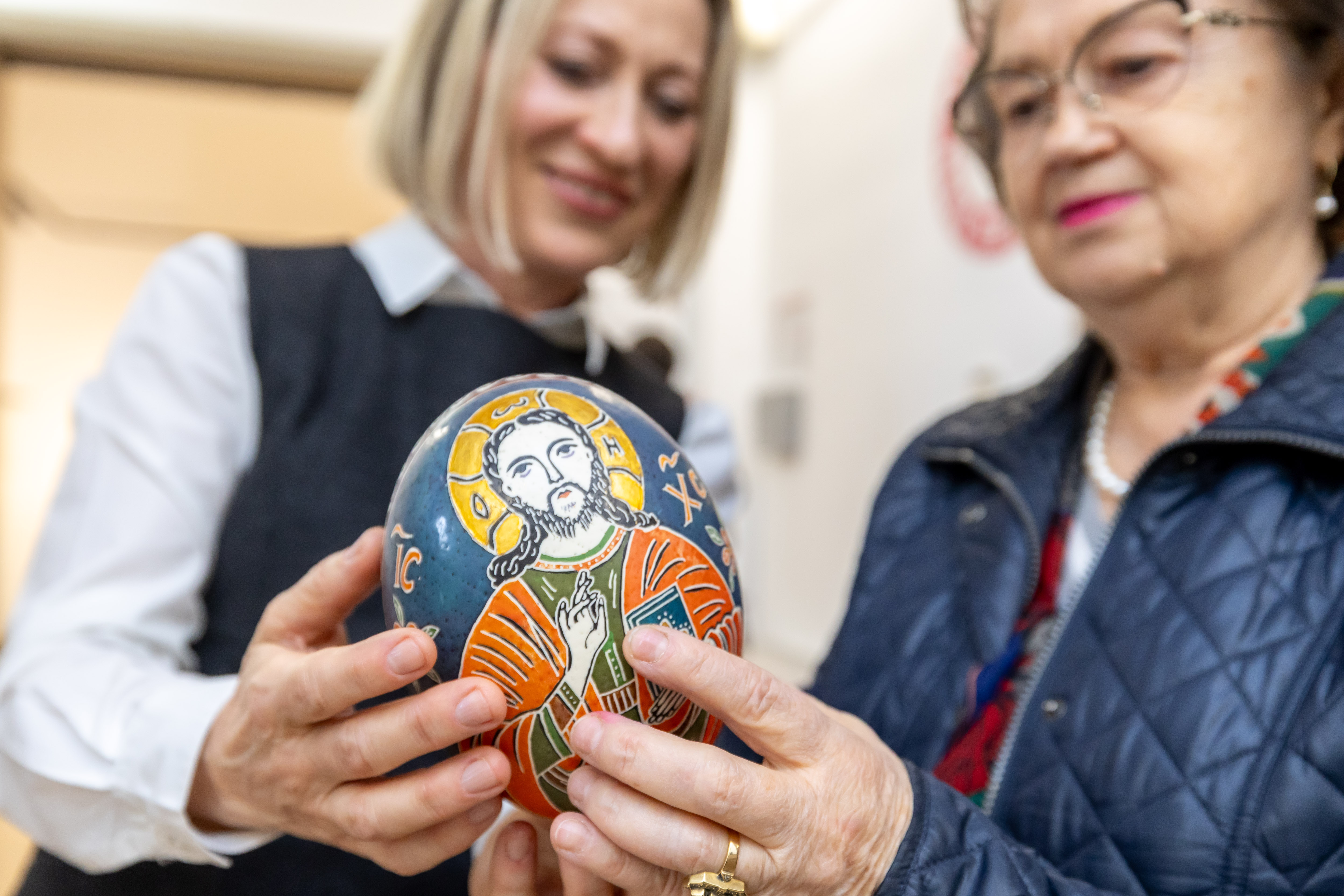
In Christian tradition, this symbolism is reconfigured around the Paschal Mystery. The egg becomes the image of the tomb that contains life, and its breaking signifies the victory over death through resurrection. The ritual of egg-tapping, preserved in popular culture, is not merely a festive gesture, but a symbolic drama of regeneration, a reaffirmation of life, of Truth, and of Goodness. The practice of egg painting, widespread in Romania, functions as a form of ritual writing. It is within this symbolic and technical context that the exhibition by artist Mariana Andone Rotaru is situated, reinterpreting the tradition of egg painting through a contemporary practice centered on the ostrich egg.
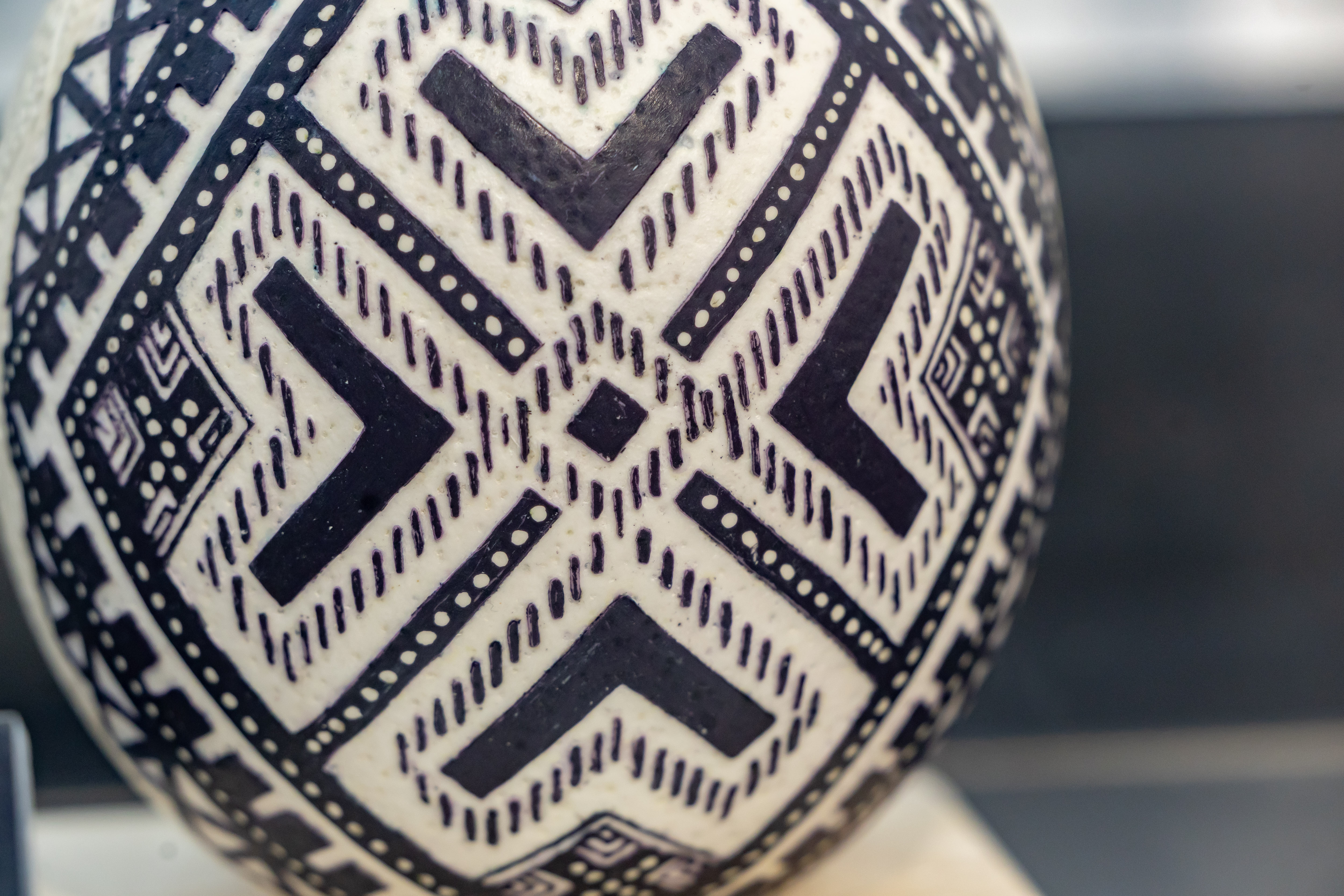
The concept behind the exhibition “OVOGRAFIE” explores the egg as a unit of measurement for genesis and as an object that contains within itself the entire universe, protected by a shell upon which the artist meticulously applies, with wax and precision, maps of our collective memory. The opening, strategically placed within the ritualistic timing of Maundy Thursday, superimposes the artistic act upon the tradition of egg painting, transforming the exhibition space into a nexus of collective memory and contemporary expression. The selection of works thus proposes a dual (re)reading: on the one hand, they preserve the memory of archaic techniques and symbols; on the other hand, they open the way to a contemporary exploration of form, fragility, and transparency. Through this process, the (initially protective) shell is perforated, rendered vulnerable, but also transformed into a filter of light.
Mariana Andone Rotaru (b. 1974, Republic of Moldova) is an archaeologist, museum curator, and visual artist based in Moriști, Cluj County. In 2005, she earned a Ph.D. in history from Babeș-Bolyai University in Cluj-Napoca. Since 2021, she has been working under the brand “MaryAndo Fior d’Or,” through which she creates embroidery on ostrich eggshells, exploring the symbolism of Easter’s sacredness through precise artistic interventions. She has exhibited at the Brukental Museum in Sibiu, the Museum of the Romanian Peasant (Bucharest), the Banat Village Museum (Timișoara), the Ethnographic Museum of Slovenia in Ljubljana, the Ethnographic Museum in Cluj-Napoca, and the Pavot Gallery (Mariott, Bucharest).